What Is Neurodivergent Design — and Why It Matters in CoHousing Communities

At Black Country CoHousing, we want to create a place where people can live together comfortably and feel truly connected. To do this well, we need to recognise something simple but important: not everyone experiences the world in the same way.
Some people find bright lights uncomfortable. Others might get overwhelmed by loud noises or busy environments. Some prefer to read information rather than hear explanations. Some people need more structure, while others prefer more flexibility.
Many of these differences are part of being neurodivergent, which includes conditions like autism, ADHD, dyslexia, dyspraxia, Tourette’s, and sensory processing differences.
Designing our community with neurodiversity in mind means making sure it works well for everyone — not by doing anything complicated, but by thinking carefully and being flexible, in how we arrange our spaces and organise our working practices as a group.
What Is Neurodivergent Design?
Neurodivergent design means shaping our homes, shared spaces, and community routines in ways that feel comfortable and manageable for people with a range of sensory and cognitive needs.
It raises questions such as:
- How does this space feel to someone who can become overwhelmed easily?
- Could we make this room calmer or easier to understand?
- Are our ways of communicating clear and simple for everyone?
- Where can we give people choices instead of just one way of doing things?
It’s not about labels or medical terms. It’s about recognising differences and making sure everyone’s needs are met.
Why It Matters: Neurodivergence Is Common, Not Rare
It’s estimated that between 15% and 20% of people in the UK are neurodivergent. That’s about one in every five of us. In a community the size of what we hope Black Country Cohousing will become, that means neurodivergent residents won’t be uncommon – they’ll be a normal part of our everyday lives together.
With numbers like these, designing spaces that consider neurodiversity isn’t just a special feature – it’s an essential part of creating places that truly work for everyone who lives there. Ignoring the needs of such a large group of society would risk building homes and communal areas that unintentionally leave out many of our current and future neighbours.
How can Neurodivergent design help make living in a Cohousing Community or Housing Co-op better?
- It helps people feel at ease. Shared spaces can be lively. That’s part of the joy of housing co-ops and cohousing — but it can also be draining for some people. Small design choices, like having quiet corners or softer lighting, and reducing echoing can make it easier for everyone to feel at ease and get involved
- It makes communication smoother. Clear agendas, written notes, and predictable meeting structures help everyone stay organised and allow for more efficient communication. It also prevents misunderstandings and takes the pressure off people who struggle with fast-paced discussions.
- It builds a deeper sense of belonging. When people are accepted just as they are—without feeling they need to change—they feel more at home. Designing spaces that support neurodivergent needs helps us celebrate everyone’s differences instead of expecting everyone to be the same.
- It benefits everyone, not just neurodivergent residents. Calmer rooms, simpler layouts, and clearer communication aren’t “special accommodations.” They make life easier for older adults, kids, busy parents, tired neighbours, and visitors too.
- It reflects the values cohousing and co-ops are built on. Values like mutual support, fairness, inclusion, kindness, and shared responsibility are at the heart of these communities. Considering neurodivergent needs is just another way of putting these values into action.


Balancing Different Needs — Even When They Clash
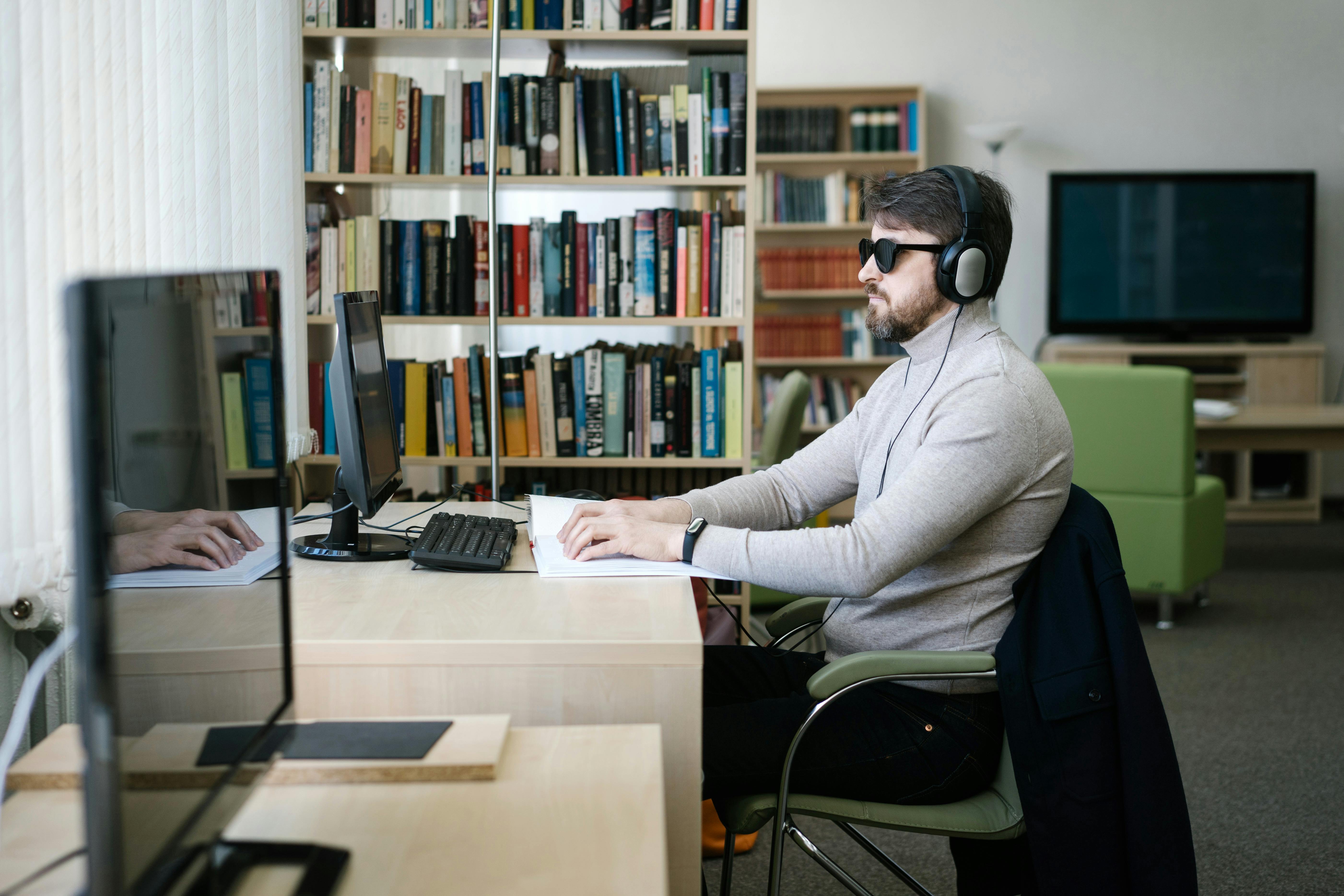
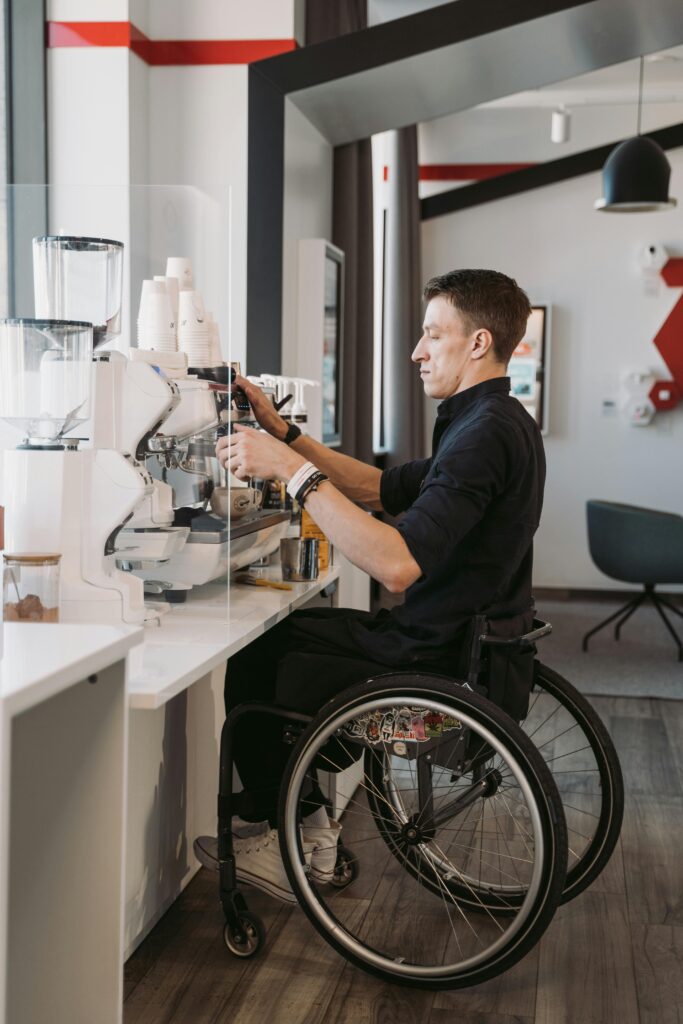
Supporting such a wide range of needs – for those who are neurodivergent and for those who have other disabilities isn’t always straightforward. Sometimes people’s access needs can even pull in opposite directions.
For example:
- One person may need bright spaces to feel safe or see clearly.
- Another may find bright lights overwhelming and need low or adjustable lighting.
- A family with young children may want open, lively shared spaces.
- Someone else may need quieter, low-stimulus areas.
And of course, we must also consider the everyday needs of residents without disabilities — people cooking, working from home, socialising, parenting, and ageing.
These situations don’t mean we can’t design inclusively. They simply invite us to be thoughtful, creative, and flexible.
How Inclusive Design Principles Help Us Make Good Decisions
Neurodiverse design is just one part of accessible design. Principles from overarching methods such as inclusive design and universal design give us a helpful framework for making decisions, especially when different needs conflict. They encourage us to:
- prioritise needs based on the function of each space
- offer choice whenever possible
- find reasonable alternatives when one solution can’t meet every need.
For example:
- Strong, reliable lighting is essential in kitchens and bathrooms for safety and everyday tasks.
- Spaces like the living room — where we relax, socialise, or unwind — benefit far more from adjustable light levels that can suit many different sensory needs.
By matching the solution to the purpose of the space, we create homes that feel balanced, practical, and comfortable for a wide range of residents.
It’s not about perfection. It’s about building with intention.
What This Looks Like in Everyday Life
Here are some practical examples of how neurodivergent design shows up — small things that can make a big difference:
Sensory-aware spaces
- Warm, adjustable lighting
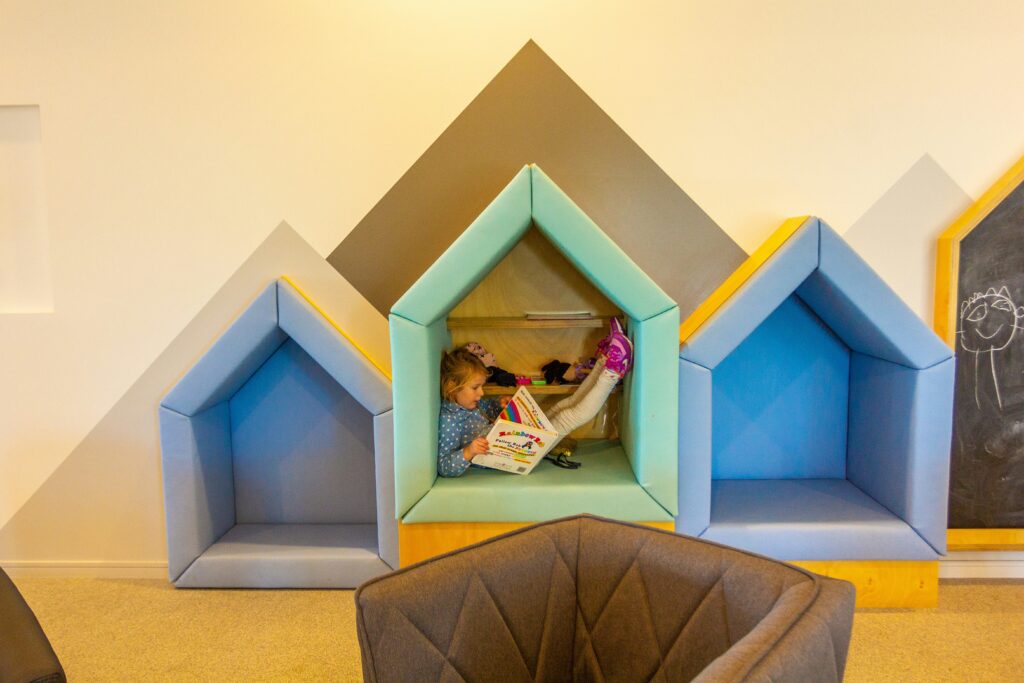
- Room shapes that reduce echo and provide cosy corners for decompression
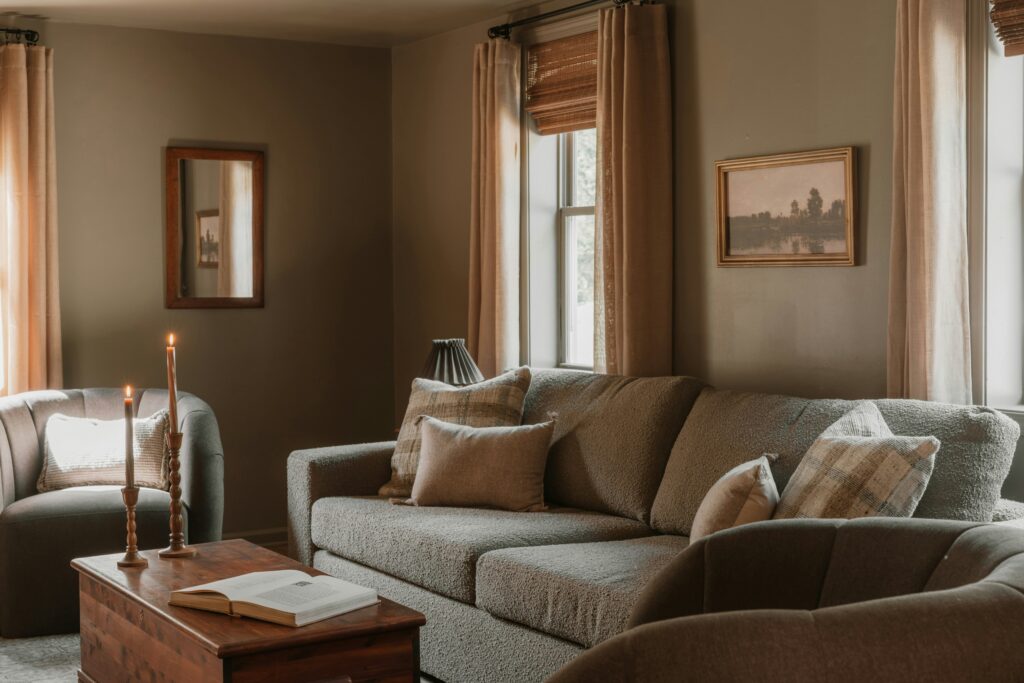
- Colours and layouts that feel calm rather than busy – this can be a reduction of visual clutter, use of mid to muted tones rather than bright neon shades and non-linear or small clustered seating arrangements offering different options.
Clear layouts and good organisation
- Intuitive pathways around the site
- Simple, non-ambiguous friendly signage
- Shared spaces that are easy to navigate with visual and physical clutter reduced.
Flexible social spaces
- Areas for groups and areas for solitude
- Outdoor spots for quiet time
- Multi-use rooms that can shift depending on the event or the energy level
Helpful communication practices
- Written updates and meeting summaries
- Clear expectations and timeframes
- A shared online space where information is easy to find
Respect for personal differences
- Freedom to join activities in your own way
- Understanding that not everyone socialises or communicates the same
- No judgement for opting out or needing space
A Community Where Everyone Can Thrive
Designing with neurodiversity in mind isn’t about creating separate areas or dividing people. It’s about recognising how we all experience the world and removing small obstacles that stop us from feeling comfortable, connected, and included.
When we design with neurodiversity in mind, we create a community where:
- more people feel welcomed
- more people feel safe
- more people feel able to participate
- more people feel at home
That’s the vision driving Black Country Cohousing — creating a community that truly works for everyone, where neurodivergent-inclusive design doesn’t just accommodate differences but enhances everyday living for all of us.
For those who want to learn more about neurodivergent, inclusive, universal, and accessible design — and how these ideas can help shape our shared spaces at Black Country Cohousing — you might find the following resources useful:
RIBAJ – British standard sets out key principles for neurodiverse design
Birbeck University – Universal Design PDF